
Warts That Won’t Go Away? When to See a Dermatologist
Learn When Persistent Warts Need Professional Dermatology Care
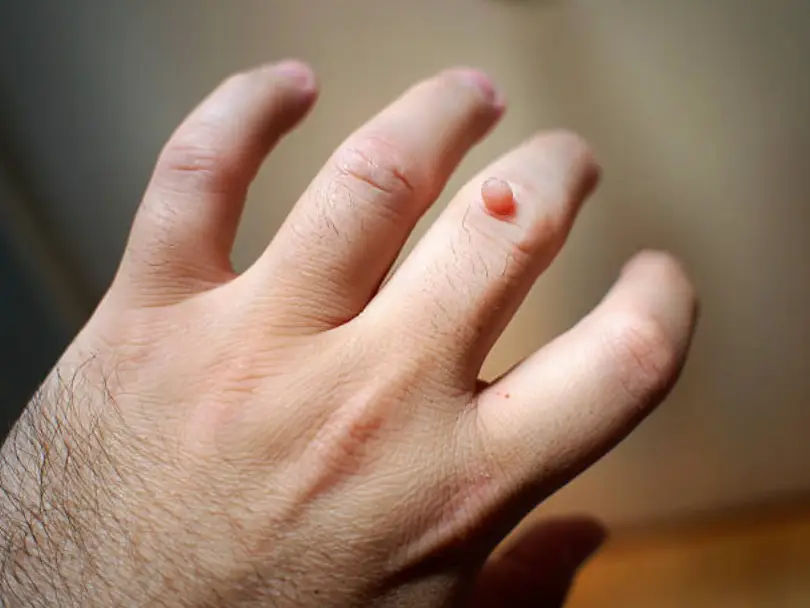

Warts are caused by a human papillomavirus (HPV) infection that triggers an overgrowth of thickened, rough skin. While many warts resolve on their own as the immune system clears the virus, others linger far longer than expected.
Learning when to see a dermatologist for warts is important. Persistent warts can become painful, spread to other areas, or resemble more serious skin conditions. This guide explains why some warts won’t go away and when professional dermatology care is the right next step.
IN THIS ARTICLE
- Why Warts Sometimes Don’t Go Away on Their Own
- Signs Your Wart Needs a Dermatologist’s Evaluation
- Why Over-the-Counter Wart Treatments Often Fail
- Effective Wart Removal Options a Dermatologist Can Provide
- Can a Wart Actually Be Something Else?
- When to See a Dermatologist in Northern Colorado
- Schedule a Wart Evaluation at Altitude Dermatology
- Frequently Asked Questions About Warts That Won’t Go Away
Your immune system can fight most common viral warts, but some persist due to how deeply the virus is embedded in the skin or how your body responds to the infection.
Common reasons warts don’t go away include:
- Deep-rooted plantar warts that grow inward
- Thick skin on the hands or feet that protects the virus
- A weak or inconsistent immune response
- Incomplete or ineffective over-the-counter treatment
Plantar warts on the soles of the feet are especially stubborn because pressure from walking forces them deeper into the skin. Warts on the palms behave similarly due to thickened skin layers that block topical treatments from reaching the viral core.
If your immune system does not fully recognize or fight the HPV infection, warts can remain for months or even years. When warts won’t go away on their own, a dermatologist can help identify the cause and recommend effective treatment.
There are generally three signs a wart requires expert care: it doesn’t improve with OTC treatments, it’s located in a sensitive area, or it doesn’t behave like a typical wart.
It’s Not Improving After Over-the-Counter Wart Treatments
OTC wart-removal peeling products containing 17-40% salicylic acid can be used once or twice daily for a few weeks. Salicylic acid softens the surface layers of the warts, making them easier to shed and peel. It’s typically effective for common and plantar warts. Another common method is covering the wart with duct tape to limit oxygen exposure to the virus. Some people use both options, applying salicylic acid first before placing duct tape over the spot. If a wart doesn’t go away after OTC treatments, a dermatologist can offer stronger options that target the wart’s core.
It’s Located in a Sensitive Area
Warts on the face, eyelids, genitals, or under the nails should not be treated at home. Skin in these areas is thinner and absorbs chemicals more easily, increasing the risk of burns, irritation, and scarring.
Dermatologists use precise techniques to remove warts safely while protecting surrounding skin, which is especially important in visible or delicate areas.
You’re Not Sure It’s Actually a Wart
If persistent warts are painful and don’t respond to topical treatment, it’s best to see a dermatologist for a proper diagnosis. Some skin bumps may look like warts, but they could be precancerous lesions. If a spot bleeds, grows rapidly, or has an unusual shape, get the right treatment from a dermatologist before it progresses to something serious.
Not every bump on the skin is a wart. If you're not sure what you’re dealing with, let a skin expert examine it for you.
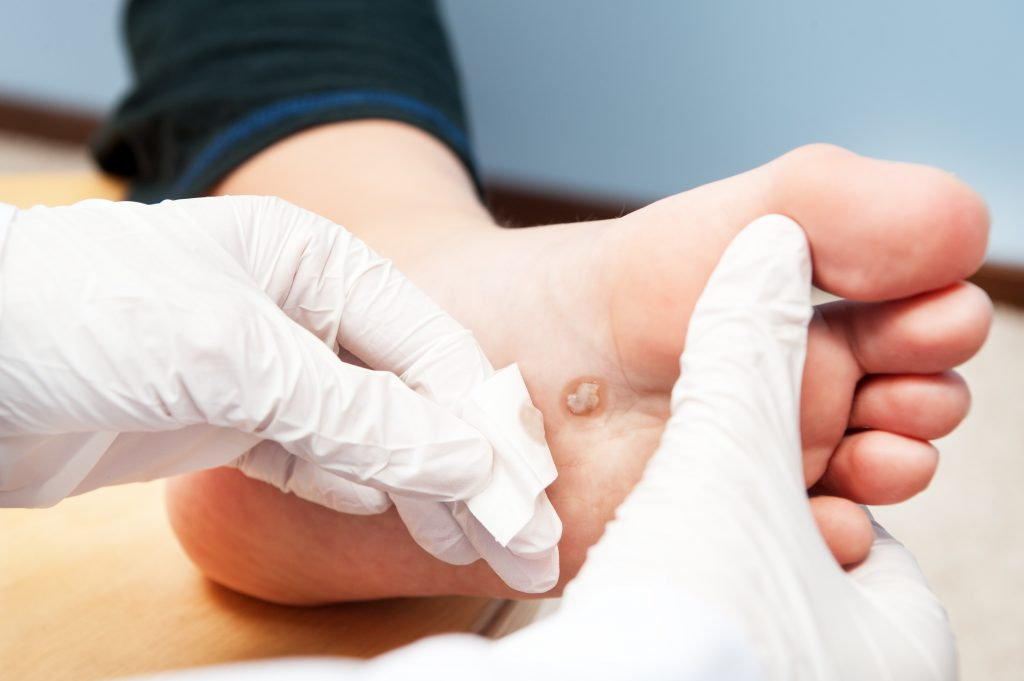
At-home wart treatments often fall short because:
- OTC freezing kits do not reach liquid nitrogen temperatures
- Salicylic acid requires consistent, prolonged use
- Thick or callused skin limits penetration
- Plantar warts grow inward and resist surface treatments
- Overuse can irritate healthy surrounding skin
When a plantar wart won’t go away with OTC products, in-clinic treatment offers deeper, more targeted solutions that address the virus beneath the surface.
A dermatologist may recommend one or more of the following professional wart removal treatments based on the wart type, location, and response to prior care:
- Cryotherapy (liquid nitrogen): Freezes and destroys wart tissue deeper than OTC freezing methods.
- Cantharidin (“beetle juice”): Causes a controlled blister that lifts the wart from the skin without pain during application.
- Prescription-strength salicylic acid: Higher concentrations designed to penetrate thick skin.
- Electrosurgery or curettage: Uses heat or scraping to remove stubborn or recurring warts.
- Laser therapy: Destroys blood vessels that feed the virus.
- Immune-modulating treatments: Help the immune system recognize and fight resistant HPV infections.
Professional wart treatments work by targeting the wart at its source, reducing recurrence and limiting spread.
Not all raised lesions are viral warts. Spots that look rough, scaly, and rapidly growing are sometimes misdiagnosed as warts, but may actually be early signs of skin cancer. Some cancers that may resemble warts include:
- Squamous cell carcinoma: May appear as a firm wart that bleeds and crusts.
- Keratoacanthoma: May look like a large wart with a crater.
- Actinic keratoses: Have a wart-like texture that starts with patches and thickens over time.
Since they share features with viral warts, identifying them correctly is critical. Painful skin lesions that bleed or change in shape should always be examined by a dermatologist. A professional evaluation can accurately diagnose the condition and help prevent more serious complications.
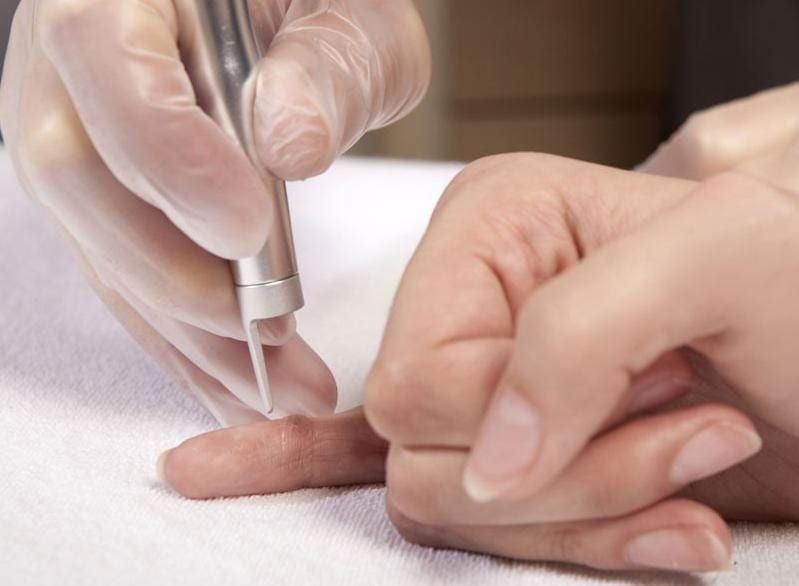
Besides being a cosmetic concern, a painful wart can affect your mobility and daily function. See a dermatologist if:
- A wart doesn’t respond to OTC treatments after 2-3 months.
- The growth changes in appearance.
- It limits your walking and hand function.
- It bleeds or crusts.
For residents of Northern Colorado, our Johnstown, Longmont, and Fort Collins dermatology clinics offer advanced wart removal procedures tailored to your skin condition and comfort level. Our medical dermatology care team specializes in cryotherapy, electrosurgery, laser therapy, and other wart-removal methods to quickly and effectively remove warts.
Knowing when to seek medical treatment for warts helps prevent their spread and progression into mosaic warts. If your wart hasn't gone away—or you're not even sure it is a wart—our dermatology team can help. Schedule a visit in Johnstown, Longmont, or Fort Collins. With professional methods, you don’t have to wait for months to see results.
FAQs About Scabs That Won’t Heal
Cut That Won't Heal FAQs
Skin Biopsy Frequently Asked Questions
What to Know About Persistent Warts and Treatment
FAQs About Acne Scar Treatment
Stress-Induced Hair Loss FAQs
Should You Pop That Pimple FAQs
Mole Check 101 FAQs
When a Rash Won’t Go Away FAQs
Cystic vs. Hormonal Acne FAQs
Infection vs. Inflammation FAQs
Skincare Routine for Acne FAQs
Flaky Scalp FAQs
Hair Loss in Women FAQs
Foot Fungus Treatment FAQs
Breakthrough Wound Care Treatments FAQs
Mole Removal Procedures FAQs
Rashes in Infants and Children FAQs
Psoriasis vs. Eczema FAQs
Topical Chemotherapy FAQ
Diet & Psoriasis FAQ
Seasonal Changes FAQs
Skin Cancer Self-Check FAQs
Diet & Eczema FAQs
If a wart hasn’t improved after 6–8 weeks of consistent treatment, it’s a good idea to see a dermatologist. Warts that linger longer may be deeper or more resistant to over-the-counter options.
Plantar warts grow inward due to pressure from walking, which can make them painful and hard to treat. Because the virus sits deep under thick skin, they often return without professional treatment.
Yes, improper use of salicylic acid or freezing kits can irritate surrounding skin and delay healing. Repeated failed treatments may also make the wart more stubborn over time.
Small, common warts can sometimes be treated at home, but warts on the face, genitals, or feet should be evaluated by a dermatologist. Treating these areas yourself increases the risk of pain, scarring, and infection.
Dermatologists examine the lesion’s appearance, texture, and growth pattern to determine if it’s a wart. If there’s any uncertainty, they may perform a biopsy to rule out other skin conditions.